Detailed Guide to Flower Planting Cold Storage
Detailed Guide to Flower Planting Cold Storage
The flower cold storage is a specialized temperature-controlled and moisture-retaining facility designed specifically for flower preservation. It can slow down the decay and wilting process of flowers, extend their shelf life, and facilitate staggered market distribution for floriculturists and dealers, ensuring better maintenance of the flowers' ornamental quality.
Different flower species have distinct temperature requirements for optimal growth. Each type of flower has a suitable temperature range, with some favoring warm climates, while others thrive in cooler environments. Here are some common flowers and their growth temperatures:
Tropical flowers such as anthuriums and phalaenopsis orchids are suitable for storage in cold storage environments with temperatures of 10°C to 12°C and humidity levels of 90% to 95%;
For temperate flowers commonly found in the market, such as roses, lilies, and carnations, the optimal storage temperature is 2°C to 5°C, with environmental humidity maintained between 85% and 90%;
There are also a few flower varieties with strong cold resistance that can be stored at lower temperatures, maintaining a range of 0°C to 2°C for optimal preservation. In addition to differences in temperature and humidity, many flowers are highly sensitive to ethylene gas. For such flowers, cold storage facilities require additional ethylene purification equipment to prevent ethylene from accelerating ripening and shortening their shelf life.
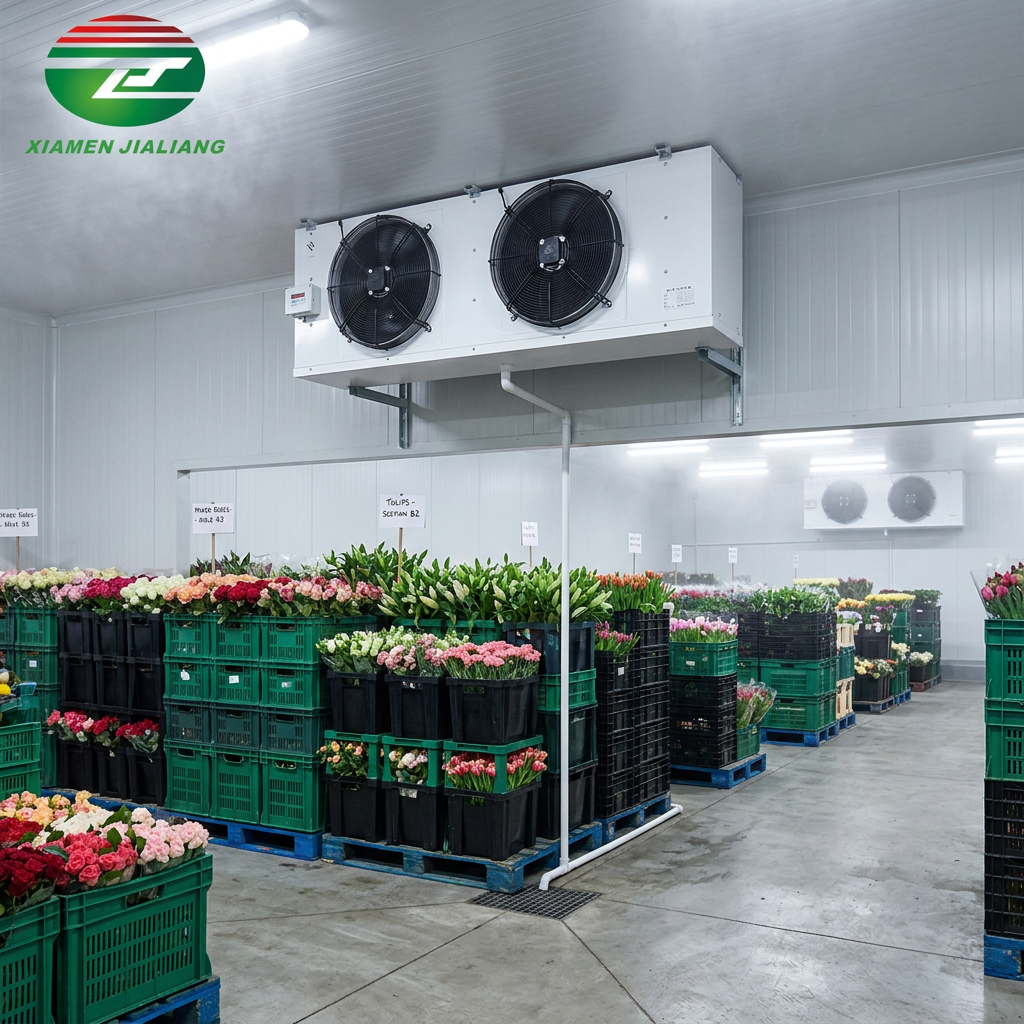
The Cold Room for Flower Cultivation plays a vital role in the flower industry, providing the following functions and benefits:
1. Preservation and Extended Shelf Life: The cold room controls temperature and humidity, offering an ideal environment for flowers to grow and significantly extending their shelf life. This is particularly crucial for flowers that require long-distance transportation or need to be sold during specific periods, as they can be transported or sold while maintaining their freshness.
2. Providing Stable Growth Environment: The cold room offers stable conditions of temperature, humidity, and light, creating an ideal environment for flowers' growth and development. This is essential to ensure flower health and quality.
3. Pest and Disease Control: Environmental control within the cold room helps reduce the occurrence of pests and diseases, as lower temperatures and humidity levels are unfavorable for certain pests. This aids in reducing pesticide usage and maintaining flower health.
4. Seasonal Supply: By utilizing the cold room, flower growers can extend the supply season for specific flower species. For instance, some seasonal flowers may not grow outdoors during winter or summer, but with the control of the cold room, growers can still supply these flowers at the appropriate times.
5. Enhanced Market Competitiveness: With the cold room providing prolonged freshness, growers can sell flowers during off-peak seasons, thereby increasing their market competitiveness. This positively impacts expanding sales channels and revenue in the flower industry.
6. Support for Export Business: For countries exporting flowers, cold rooms are crucial facilities to ensure flower quality and freshness during transportation. Exported flowers often require long-distance shipping, and cold rooms help maintain their quality throughout the transport process.
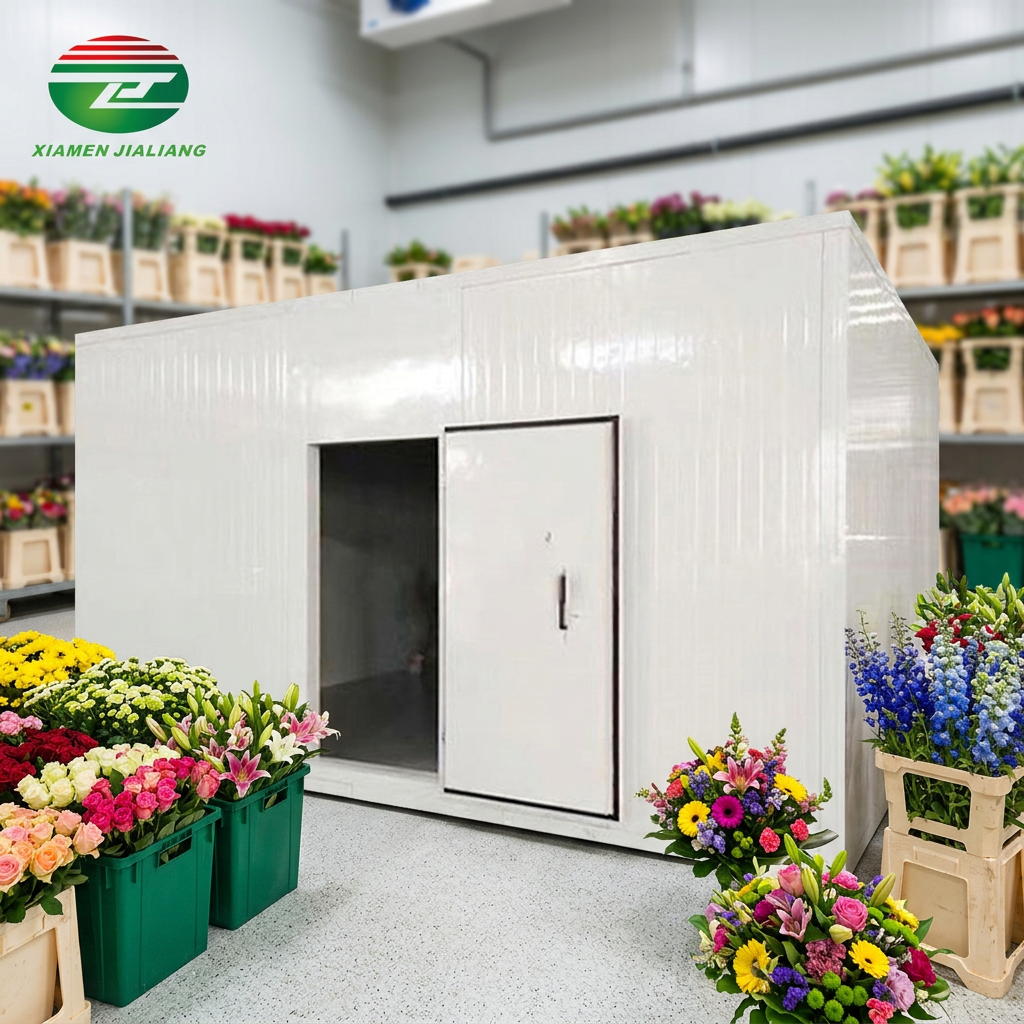
Precautions for designing flower cold storage
Firstly, it is necessary to do a good job in temperature zoning design, as there are differences in the storage temperature and humidity requirements for different types of flowers. Zoning temperature control can meet the storage needs of multiple types of flowers at the same time, avoiding mixed storage of different flowers that cannot achieve the ideal preservation effect.
Secondly, it is necessary to control the moisture retention performance of the cold storage. Fresh flowers require high humidity, so it is necessary to choose suitable insulation and moisture retention storage boards during design, seal the joints of the storage body, avoid moisture loss in the cold storage, and maintain a stable high humidity environment.
In addition, ventilation systems and purification devices should be planned in advance based on the type of flowers stored. For flowers sensitive to ethylene, installation space for ethylene purification devices should be reserved. At the same time, ventilation circuits should be designed reasonably to ensure uniform temperature and humidity inside the cold storage and avoid local temperature and humidity anomalies affecting the quality of flowers.
Finally, it is necessary to do a good job in the overall design of insulation and moisture prevention, to avoid the infiltration of heat and air from the outside of the cold storage into the interior, reduce temperature control energy consumption, and prevent condensation and moisture on the exterior walls of the cold storage, thus extending the service life of the cold storage.
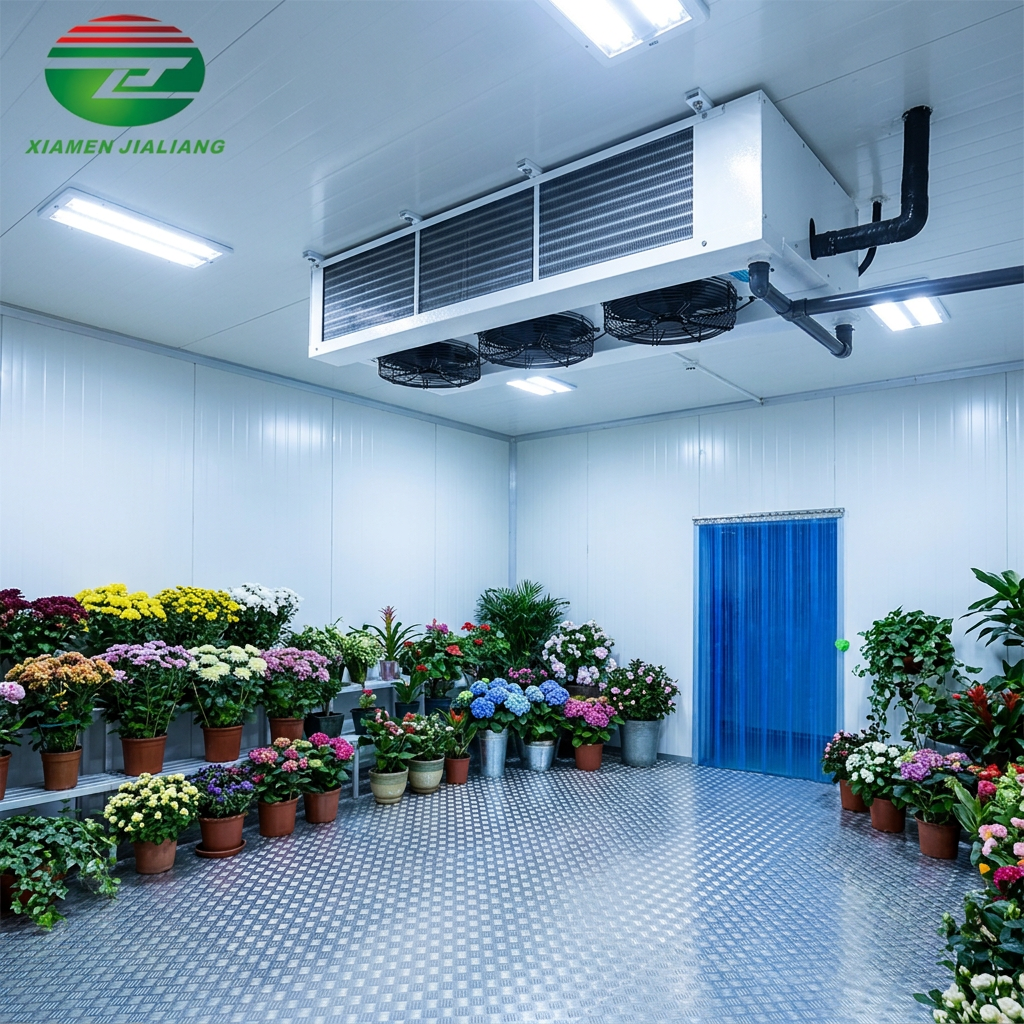
In conclusion, a Cold Room for Flower Cultivation is an indispensable facility in the flower industry. It provides stable growth conditions, extends shelf life, helps growers offer high-quality flower products, and maintains competitiveness in the market. For more information about cold rooms for flower cultivation, please contact us. Our website is www.coldroomjl.com.