Introduction To Various Sizes Of Cold Storage Facilities
Introduction To Various Sizes Of Cold Storage Facilities
Common cold storage facilities can be divided into three categories based on their size and scale: small cold storage, medium cold storage, and large cold storage, each adapted to different usage needs.
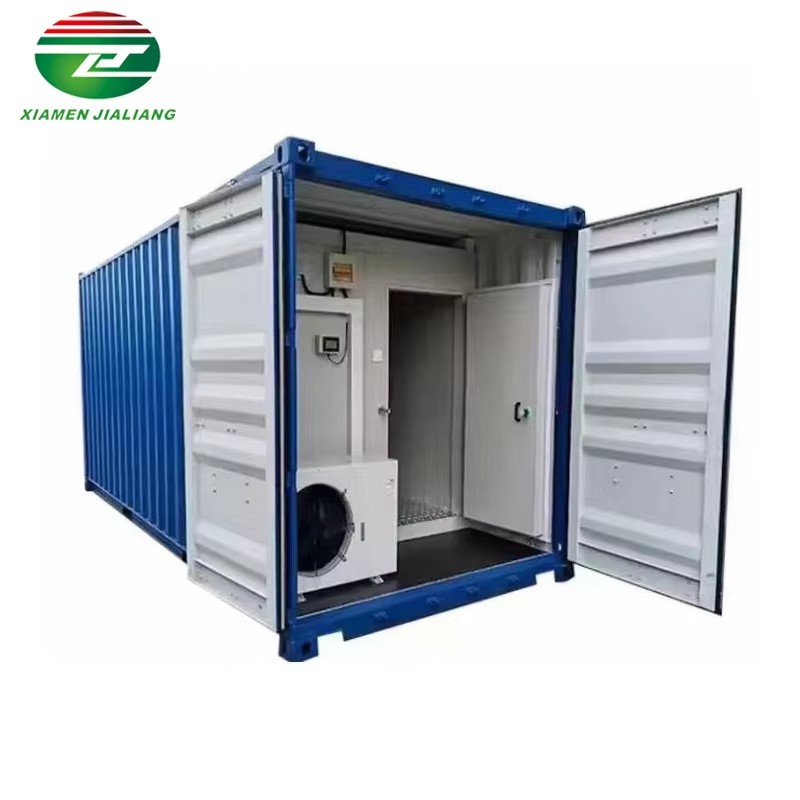
Small cold storage facilities generally have a storage capacity of less than 1000 cubic meters and are mostly built in production areas, community shops, or small processing enterprises. They are mainly used for small-scale fresh food storage, drug sample refrigeration, or private commercial stocking. The overall cost is low, the installation is flexible, and the site requirements are not high. Many internal compartments can also be adjusted according to actual storage needs.
The storage capacity of medium-sized cold storage is usually between 1000 and 10000 cubic meters, which is mostly used by regional distributors, chain fresh food enterprises, or small and medium-sized food processing plants. It can meet the zoning storage of multiple categories and large batches of goods, and some may also be equipped with simple functions such as preliminary sorting and pre cooling to adapt to regional product allocation needs.
The storage capacity of large cold storage facilities is generally over 10000 cubic meters, mostly built for national level warehousing bases, large logistics parks, or large fresh e-commerce enterprises. They not only have large storage capacity, but also are equipped with specialized loading and unloading, sorting, and temperature control systems to undertake cross regional material reserve and circulation transfer functions. Many large public cold storage facilities also open storage rental spaces to serve multiple small and medium-sized businesses.
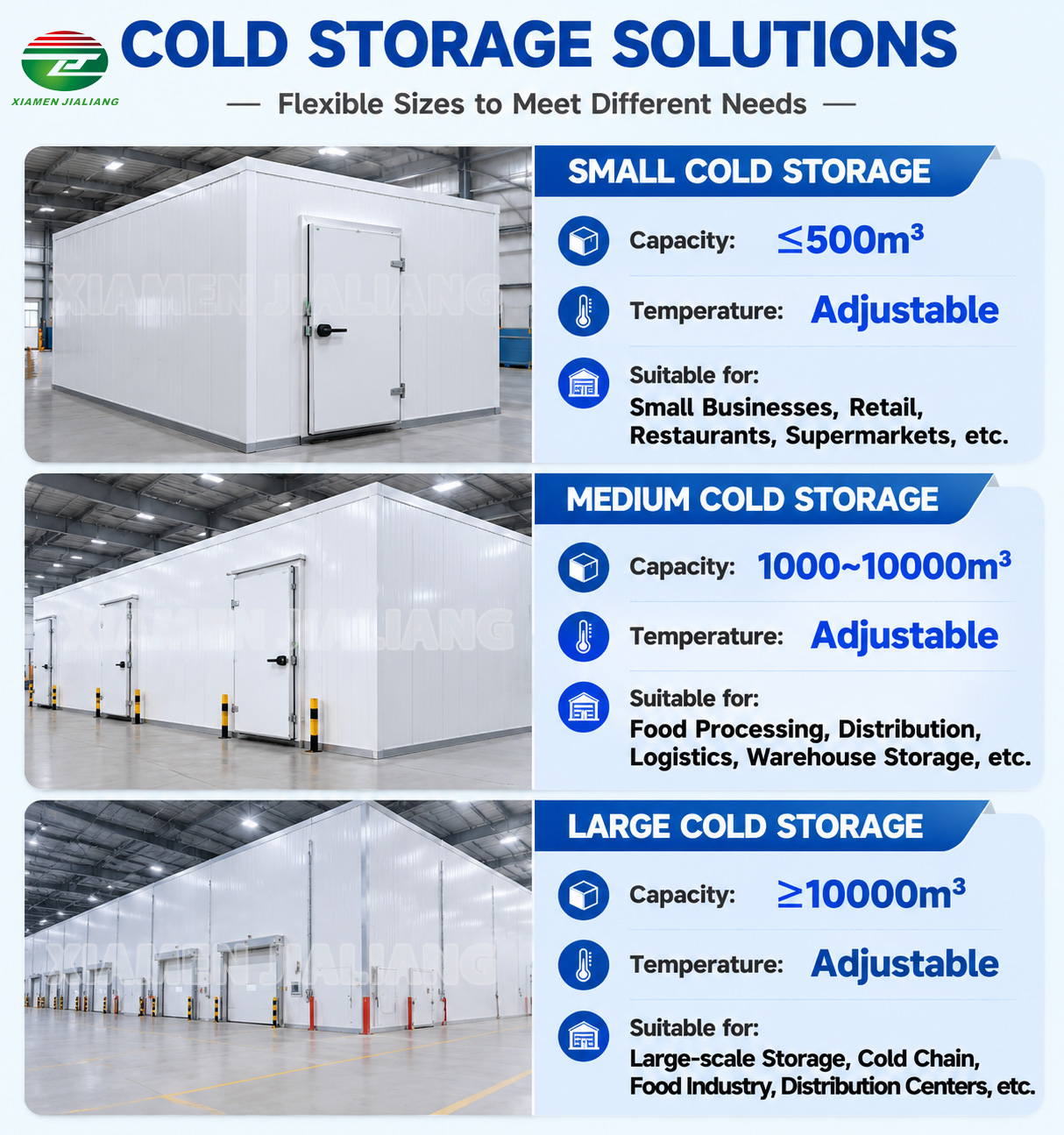
In addition to dividing the size scale according to storage capacity, some industries also roughly distinguish the size of cold storage based on actual usage scenarios and floor area: generally, a floor area of less than 500 square meters is classified as small, 500 to 2000 square meters is classified as medium, and more than 2000 square meters is classified as large cold storage. The classification standards for different sizes of cold storage are not absolute. Different construction enterprises will adjust the range of intervals according to their own business scenarios. During construction, the size can also be customized according to the actual land conditions and storage needs of users. There is no need to strictly adhere to a unified storage capacity classification standard. When choosing, only the appropriate specifications need to be determined based on their own business scale, storage category, and turnover frequency.
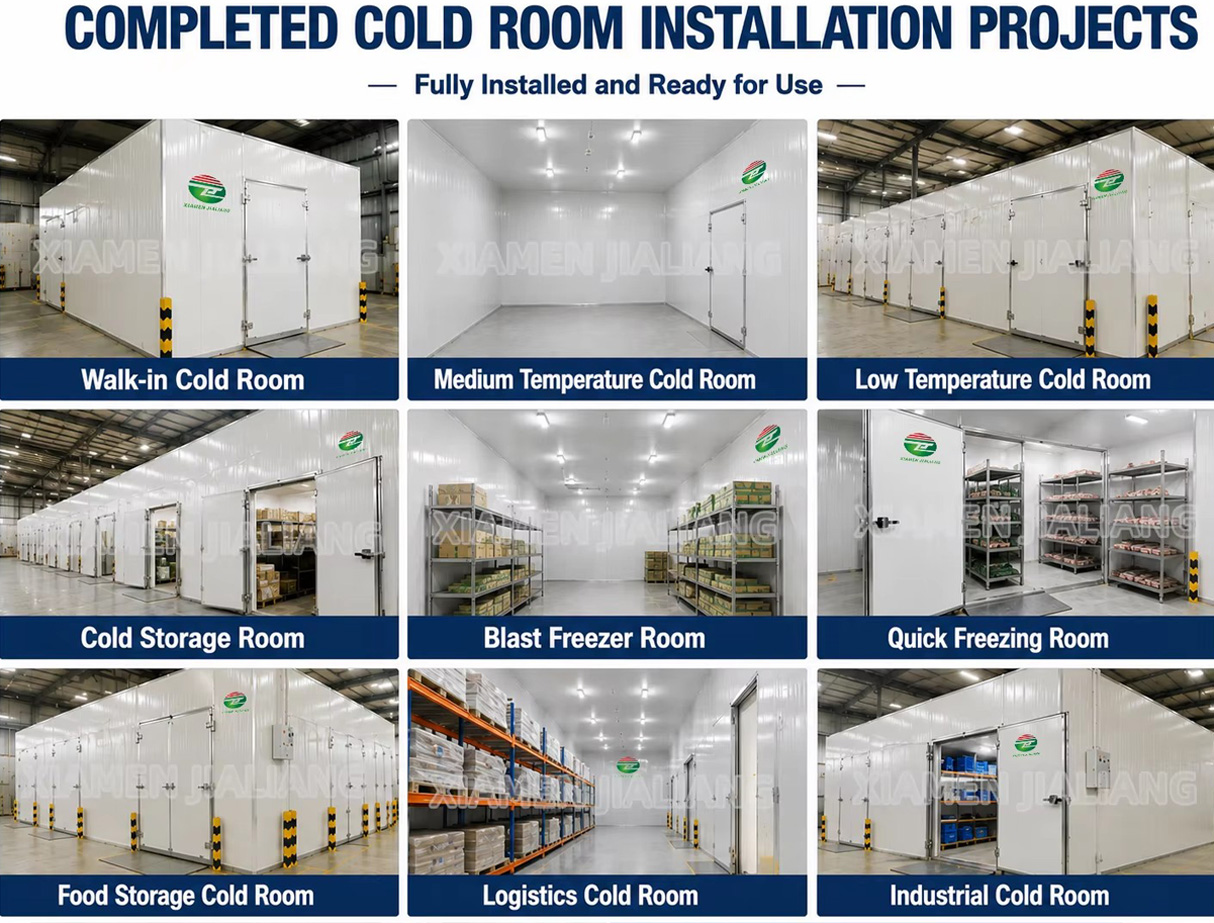
When selecting a cold storage size that suits one's own needs, there are two key points that need to be planned in advance:
Firstly, it is not enough to only calculate the space required for storing the goods themselves, but also to leave sufficient idle space for shelf installation, cargo handling, and refrigeration equipment maintenance to prevent the inability to carry out storage operations normally after the goods are piled up;
Secondly, if you have a clear expansion plan, it is best to reserve 1 to 3 years of growth storage space in advance, and not just use up the current site capacity to avoid the need for secondary renovation of the cold storage in a short period of time, which may increase additional costs.
In addition, it is necessary to adjust the reserved space based on the characteristics of the stored goods: if storing goods that require frequent turnover and sorting, larger operating channel space should be reserved; If it is a long-term static storage material, the idle space can be appropriately compressed to improve the utilization rate of storage capacity.
For example, when storing frozen fruits and vegetables that require frequent replenishment and sorting, a wider handling channel should be reserved compared to storing grains in long-term static reserves to ensure the efficiency of loading, unloading, and sorting; For storing special goods such as vaccines and biological reagents, in addition to reserving space for maintenance and operation of temperature control testing equipment, a dedicated area for sampling and testing must also be separately designated, which cannot be mixed with storage areas. The details of these goods' characteristics will directly affect the actual size of the cold storage required.