Home / Condensing Unit
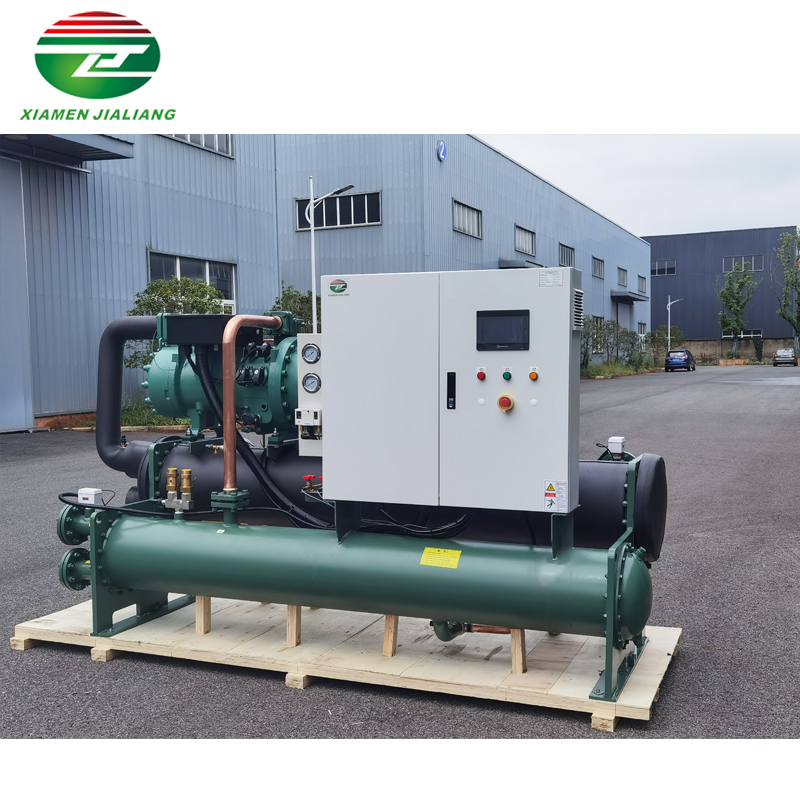
water chiller system
  • water chiller systemwater cooled chiller
    • Xiamen Jialiang Water Chiller System Screw Water Cooled Chiller
    • Chiller unit plays a crucial role in maintaining temperatures for processes or spaces that require controlled cooling.

    • CSH8593-180Y180HPR134aBitzer BandXiamen Jialiang
    • Get A Quote
    • Description
    • Features

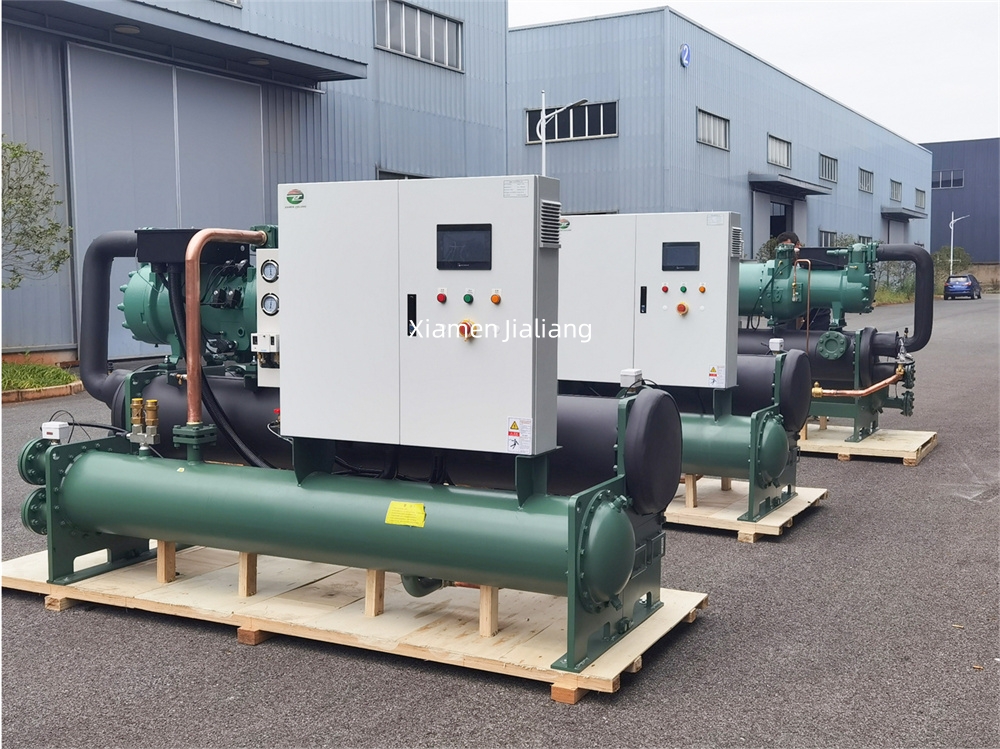
    Xiamen Jialiang Water Chiller System Screw Water Cooled Chiller


    Product Description


    Chiller unit is a refrigeration device that removes heat from a liquid, typically water or a mixture of water and glycol, to cool a space or equipment. Chillers are commonly used in air conditioning systems for large buildings, industrial processes, and other applications where precise temperature control is essential.


    Model

    CSH8593-180Y

    Horse Power

    180HP

    Power(kW)

    440V/3P/60Hz

    Refrigerant

    R134a

    Cooling Method

    Water-Cooling

    Outlet/Return Water Temperature

    7/12℃

    Evaporating Temperature

    2℃

    Condensing Temperature

    40℃

    Refrigeration Capacity

    369kW

    317.3(103kcal/hr)

    Overall Size

    3400*1300*1740mm

    Noise Value

    73dB(A)

    Overall Weight

    2920kg

    Operating Weight

    3270kg

    Compressor

    Input Power

    87.7kW

    Operating Current

    142.9A

    Capacity Control

    25%-50%-75%-100%

    Condenser

    Water Pipe Connection

    DN125mm

    Water Flow

    78m³/h

    Water Pressure Drop

    44kPa

    Evaporator

    Water Pipe Connection

    DN125mm

    Water Flow

    63m³/h

    Water Pressure Drop

    39kPa


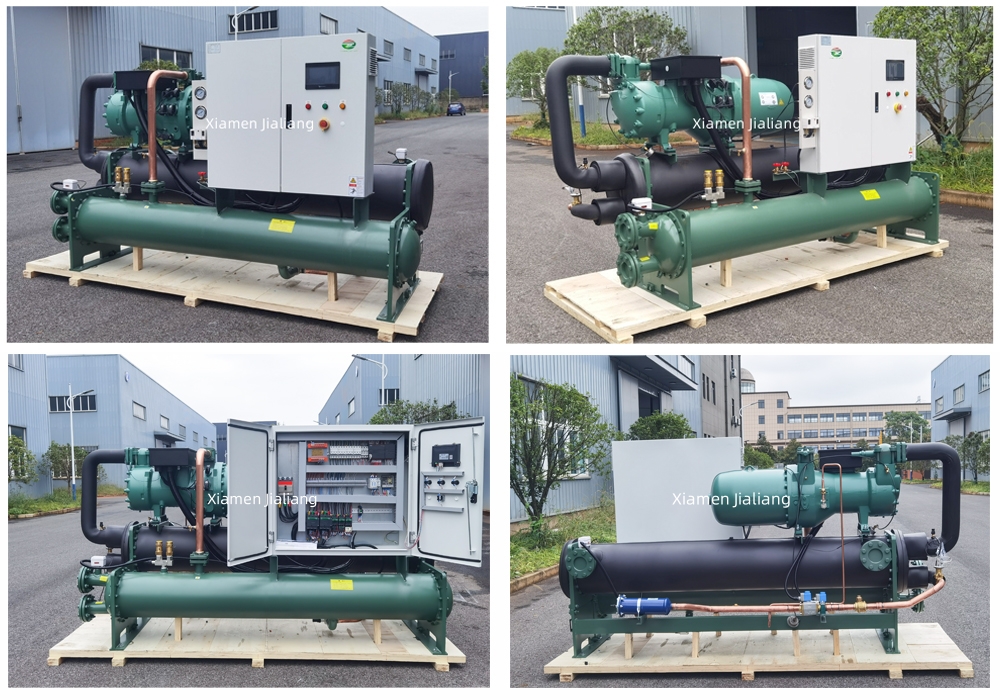
    Product Display


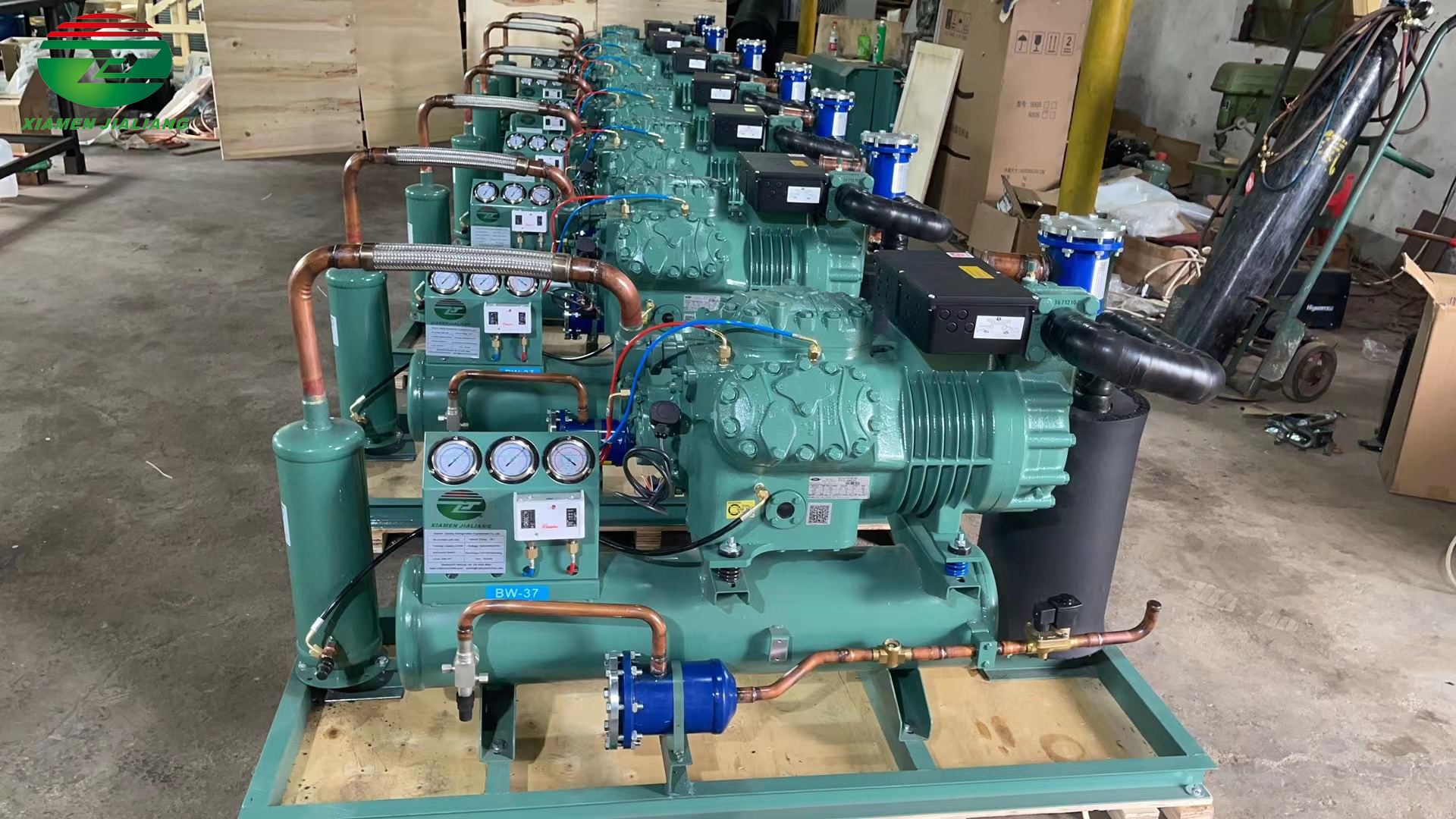
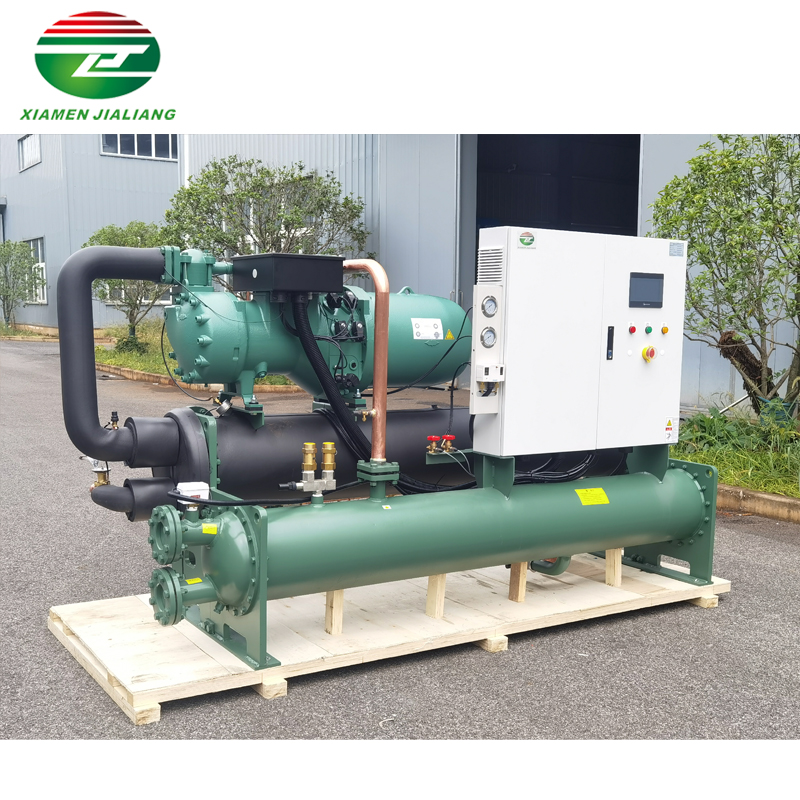
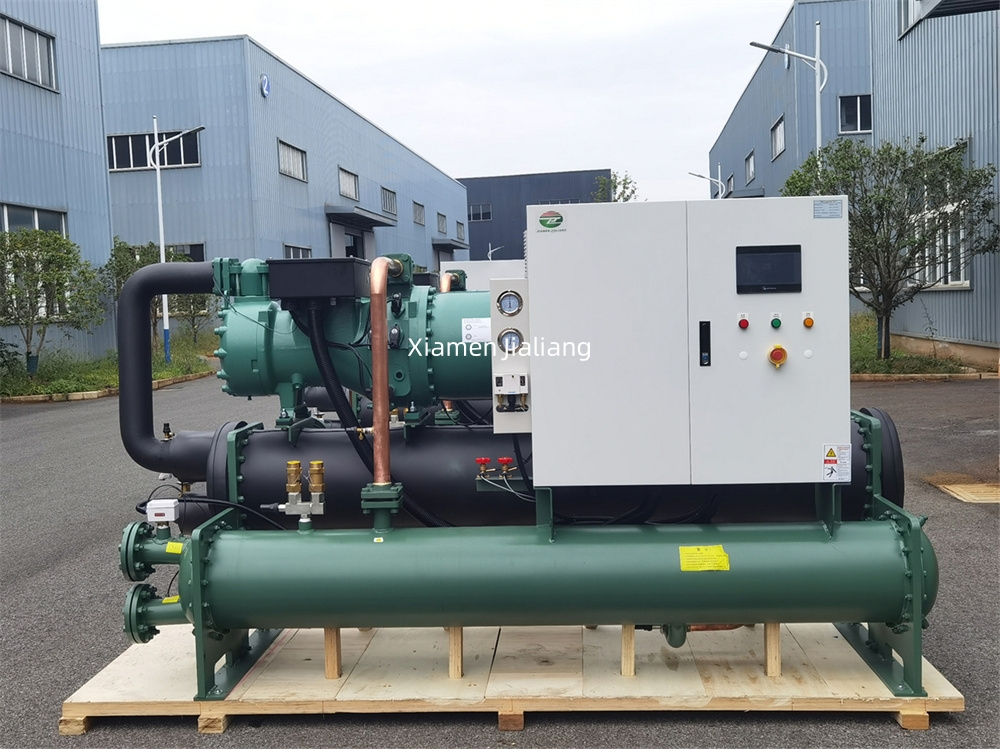
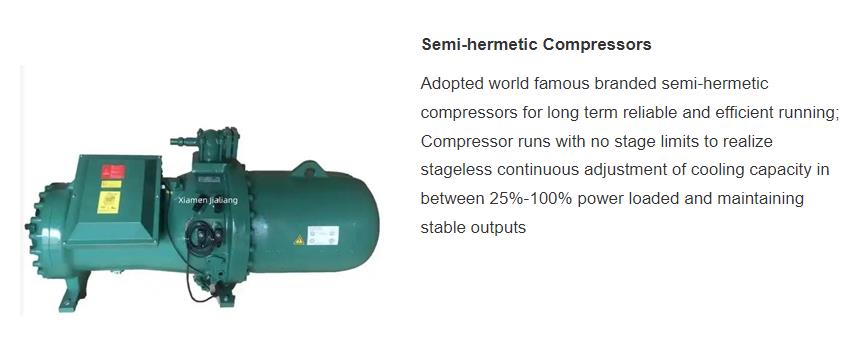
    1. Compressor:The compressor is responsible for pressurizing and circulating the refrigerant within the chiller system.


    2. Evaporator:This component absorbs heat from the process water or air, causing the refrigerant to evaporate.


    3. Condenser: The condenser releases the heat absorbed by the refrigerant into the external environment, usually through air or water.


    4. Expansion Valve: This valve regulates the flow of the refrigerant, controlling its pressure and temperature.


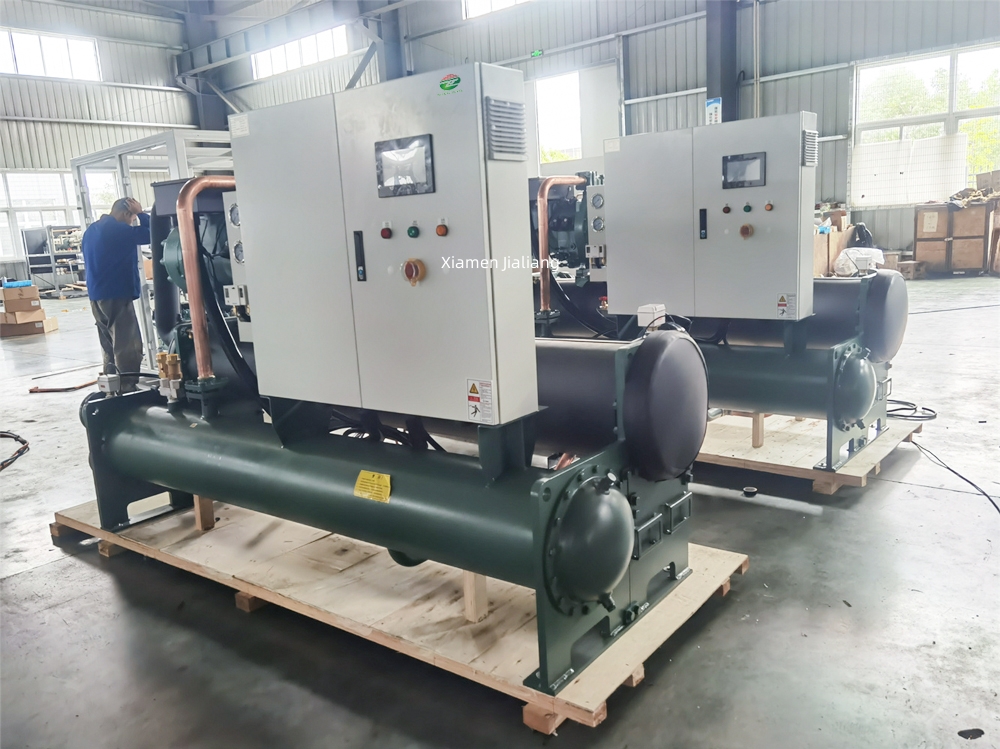
    Our Factory


    Applications


    Air Conditioning: Chillers are widely used for air conditioning in commercial and industrial buildings.


    Process Cooling: Industries use chillers to control temperatures in manufacturing processes such as plastics production and pharmaceuticals.


    Hospitals: Chillers play a vital role in cooling medical equipment and maintaining comfortable temperatures in healthcare facilities.


    Contact Us

    Related Condensing Unit
    Contact Us
    • Name: *
    • Email: *
    • Skype/WhatsApp/Tel: *
    • Country: *
    • Details: *
    JiaLiang Blog

    we have experienced projects all over the world and provide trustworthy solution services to meet customers' need.

    • 14
      Jul
    • Comparison And Selection Between Solar Cold Room And Ordinary Cold Room
    • Solar-powered cold storage and conventional cold storage each have their pros and cons, suited to different usage scenarios: As a new energy-efficient cold chain storage solution, solar-powered cold storage aligns with the trend of low-carbon development and can address refrigeration needs in remote areas without electricity, but it requires high upfront investment and is affected by weather conditions in terms of stability. Conventional cold storage, with its mature technology, low cost, and stable power supply, remains the mainstream choice in the current market, but it entails high long-term operating costs, significant carbon emissions, and limited application scenarios. In practical applications, there is no absolute superiority or inferiority—only by considering factors such as site conditions, budget scale, and operational requirements can the most suitable cold storage type be selected.
    • -Read More
    • 06
      Jul
    • Design and Application Scenarios of Ice Cold Storage
    • Ice cold storage is a specialized low-temperature cold storage used for storing ice cubes. Its core requirement is to maintain a stable low-temperature environment to avoid ice melting and loss. It can be built to different scales according to demand and adapted to different ice usage needs in different scenarios. It widely serves multiple fields such as food preservation supply, ice storage cold chain logistics, industrial production, engineering cooling, etc. It can balance the seasonal and off peak differences in ice production and demand, and stably guarantee the supply of ice sources. In the design and construction process, it is necessary to focus on five core tasks: thermal insulation of the warehouse body, matching of refrigeration unit power, safe operation, construction of drainage system, and temperature monitoring, in order to ensure the long-term stable operation of the ice cold storage and meet the needs of long-term ice storage.
    • -Read More
    • 18
      Jun
    • Solar Powered Cold Storage: A Green New Choice For Agricultural Fresh Food Preservation
    • Over the past few decades, solar-powered cold storage has gone through invention, development, and maturation, standing the test of the market. In the current situation of energy scarcity and increased environmental awareness, it has gradually become the first choice for purchasing cold storage. Its advantages are evident:
    • -Read More
    Ok