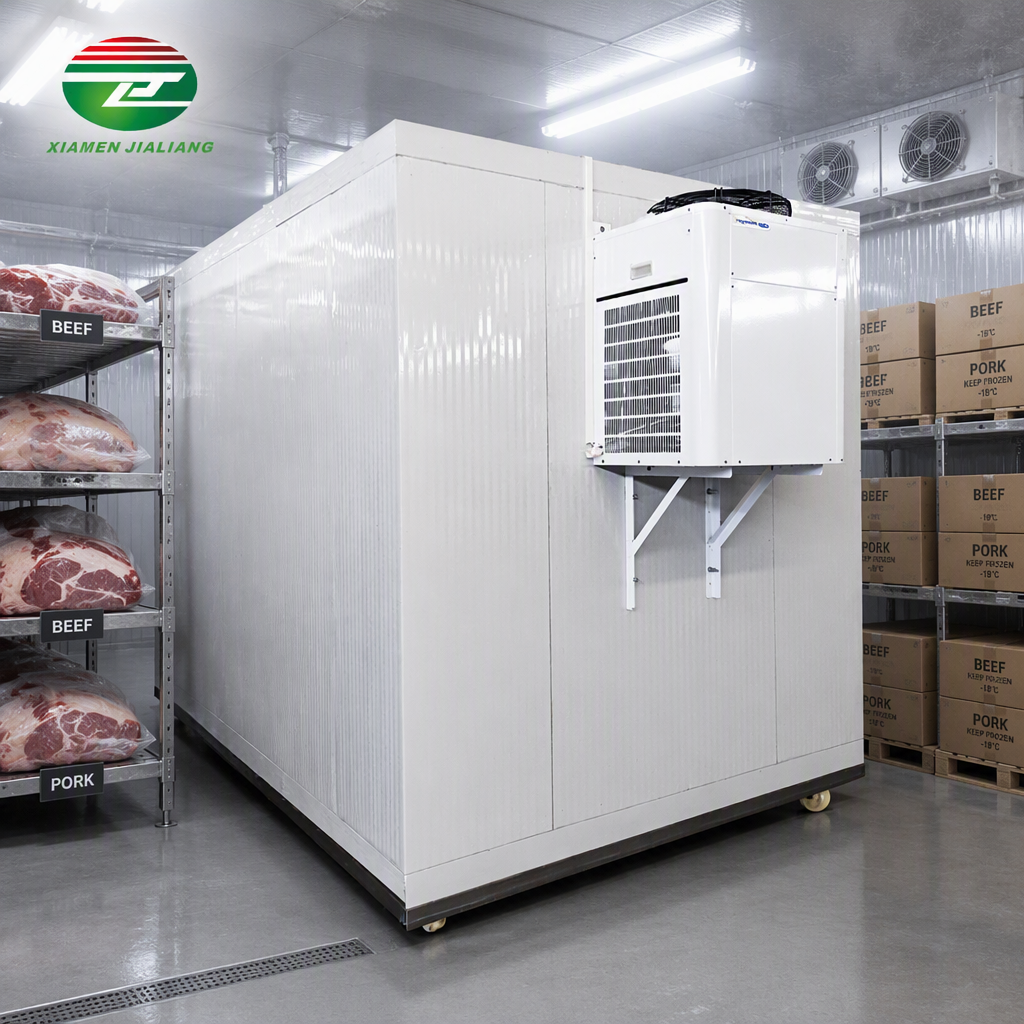
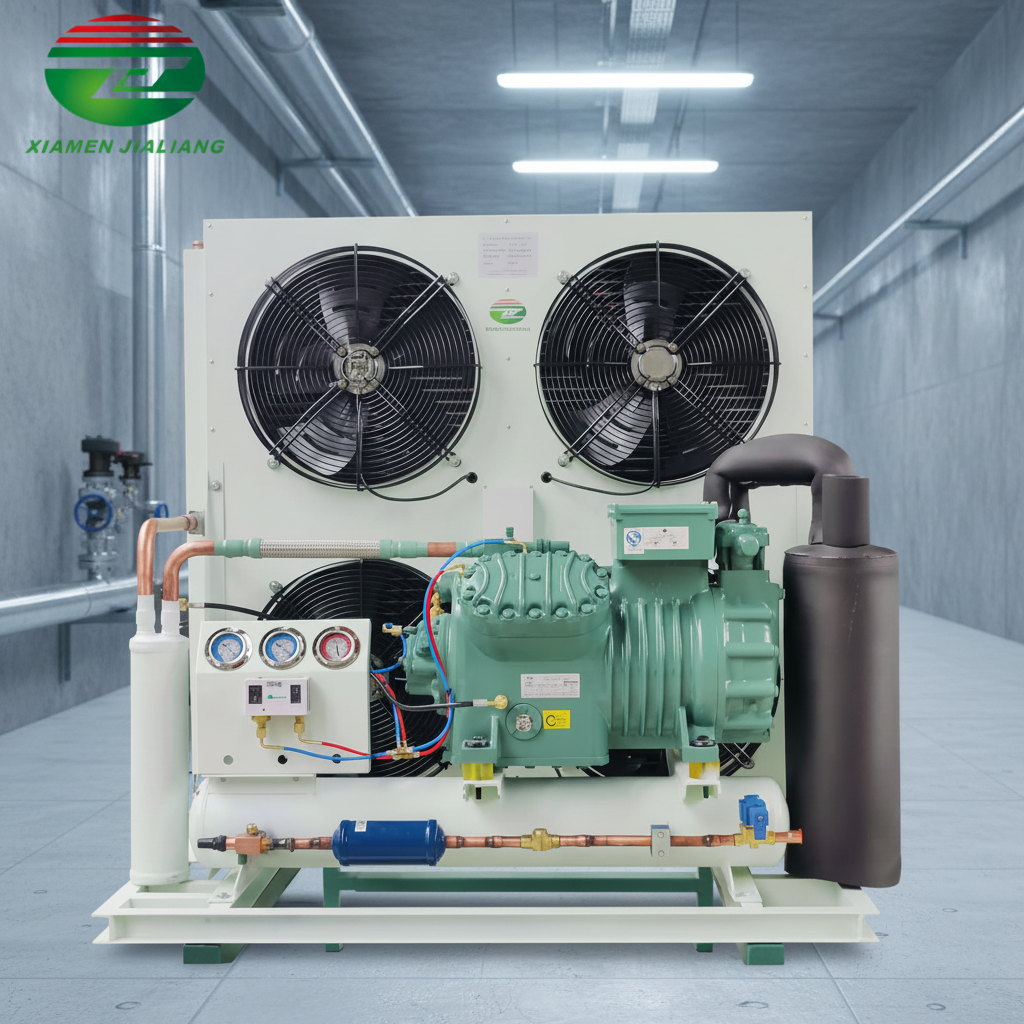
- Condensing Unit Air Cooled Condenser
Complete Refrigeration Equipment Solution
- Get A Quote
- Description
- Features
Condensing Unit Air Cooled Condenser
What Is a Refrigeration Condensing Unit?
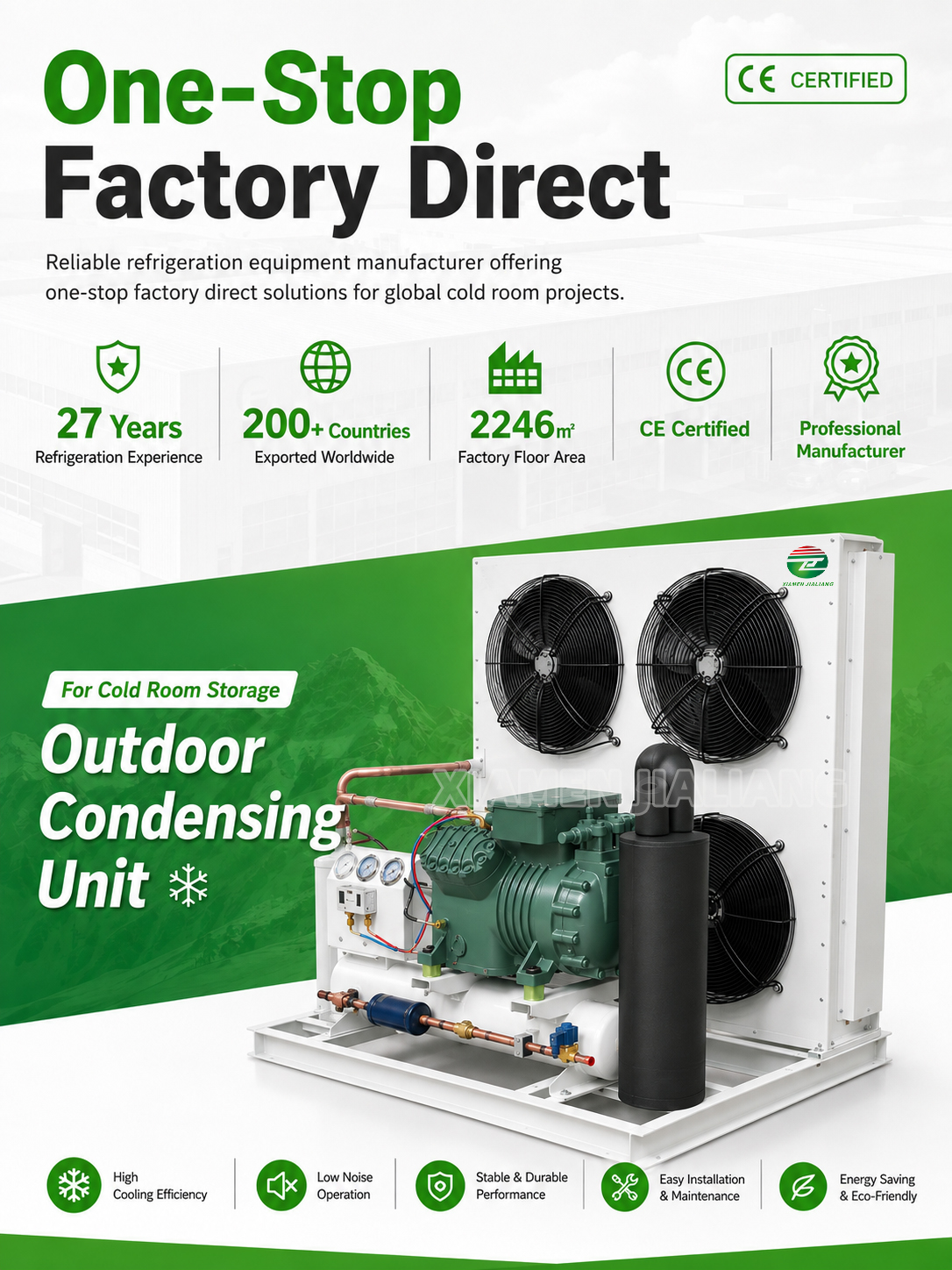
A refrigeration condensing unit is one of the most important components in a cold storage refrigeration system. Its main function is to remove heat from the refrigerant and complete the refrigeration cycle to maintain a stable low-temperature environment.
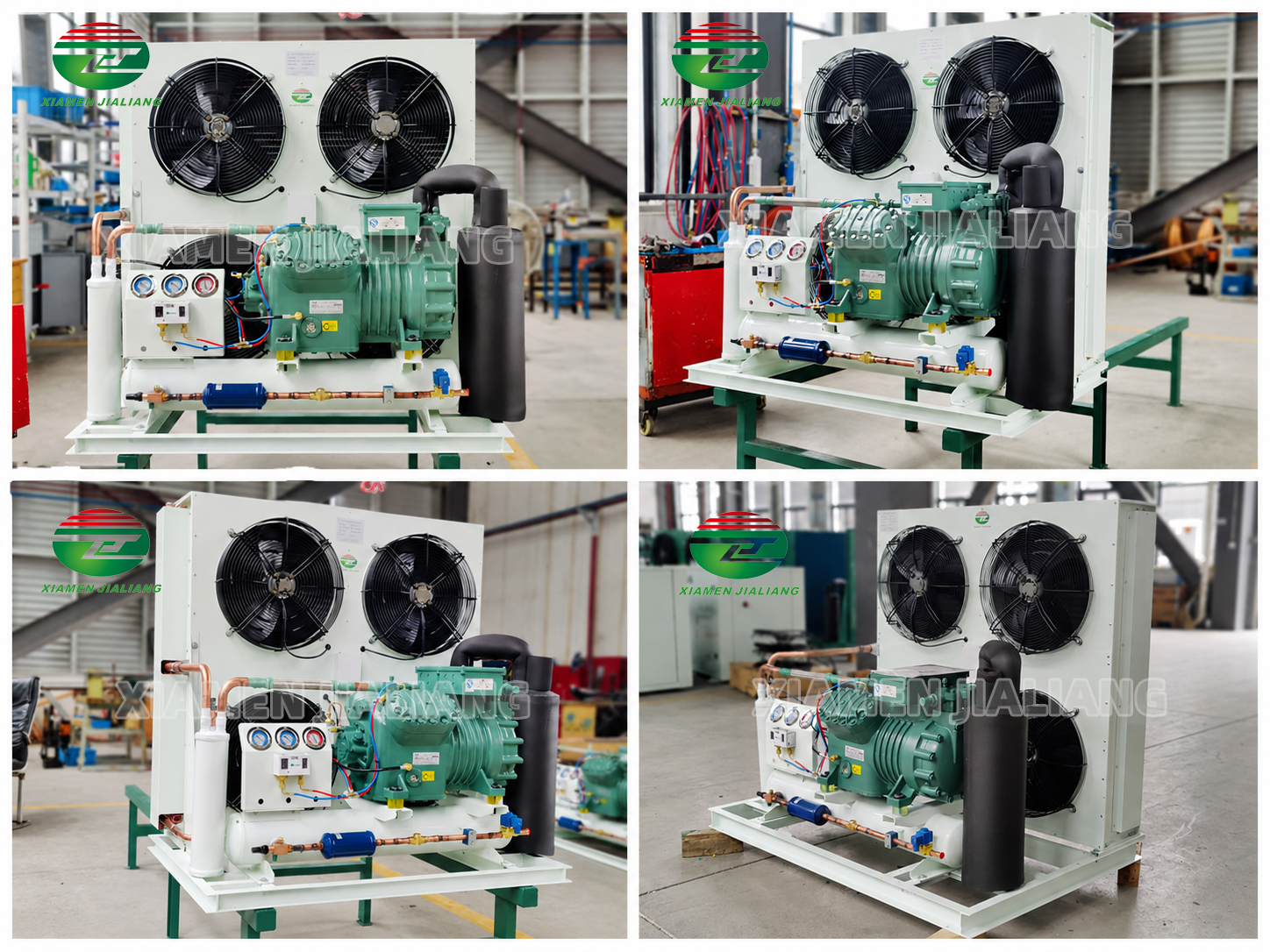
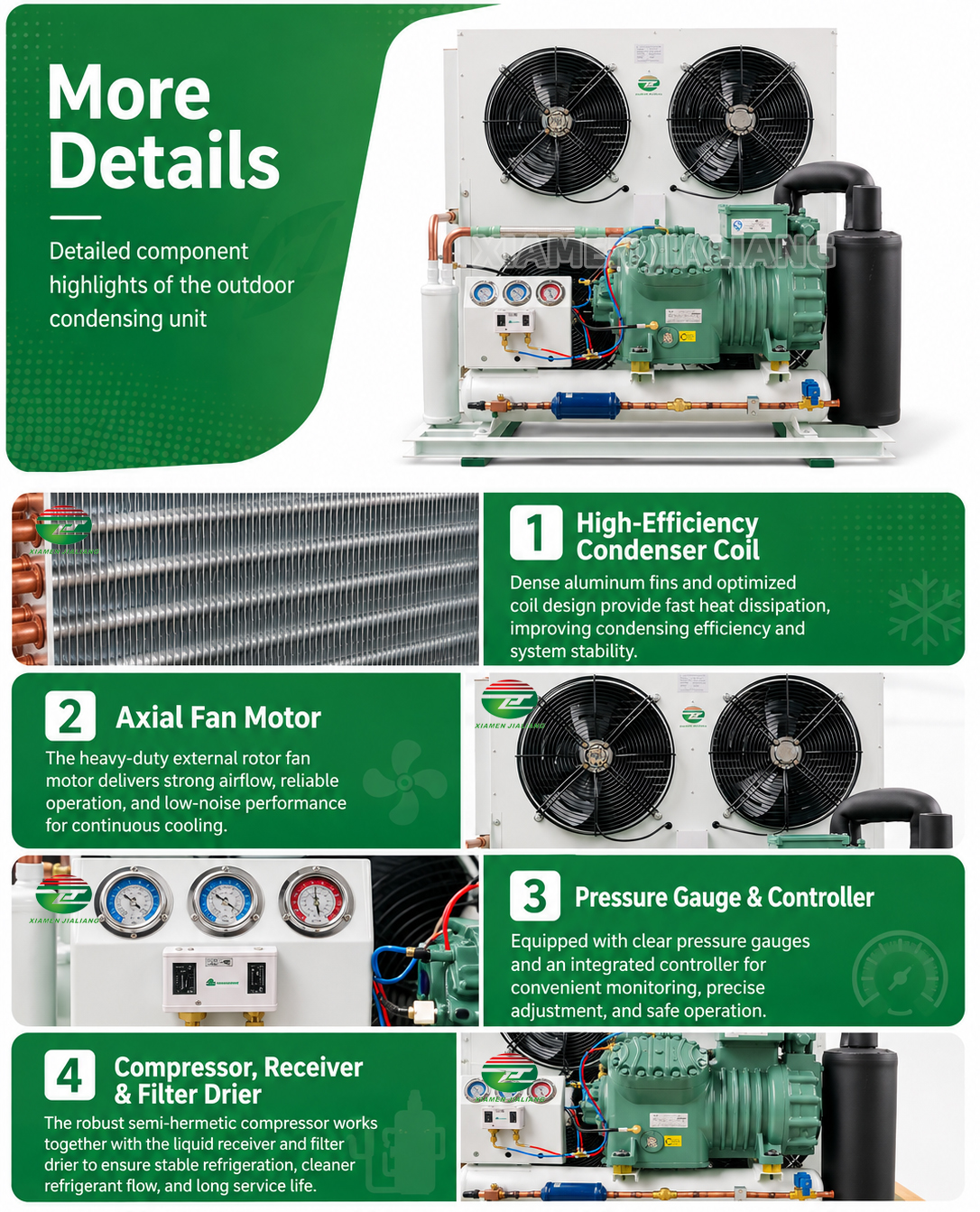
A complete condensing unit usually includes:Compressor,Condenser,Receiver,Control system,Fan system,Safety protection devices.
By working together, these components provide reliable cooling performance for cold rooms, freezer rooms, food storage facilities, and industrial refrigeration systems.
How Does a Condensing Unit Work?
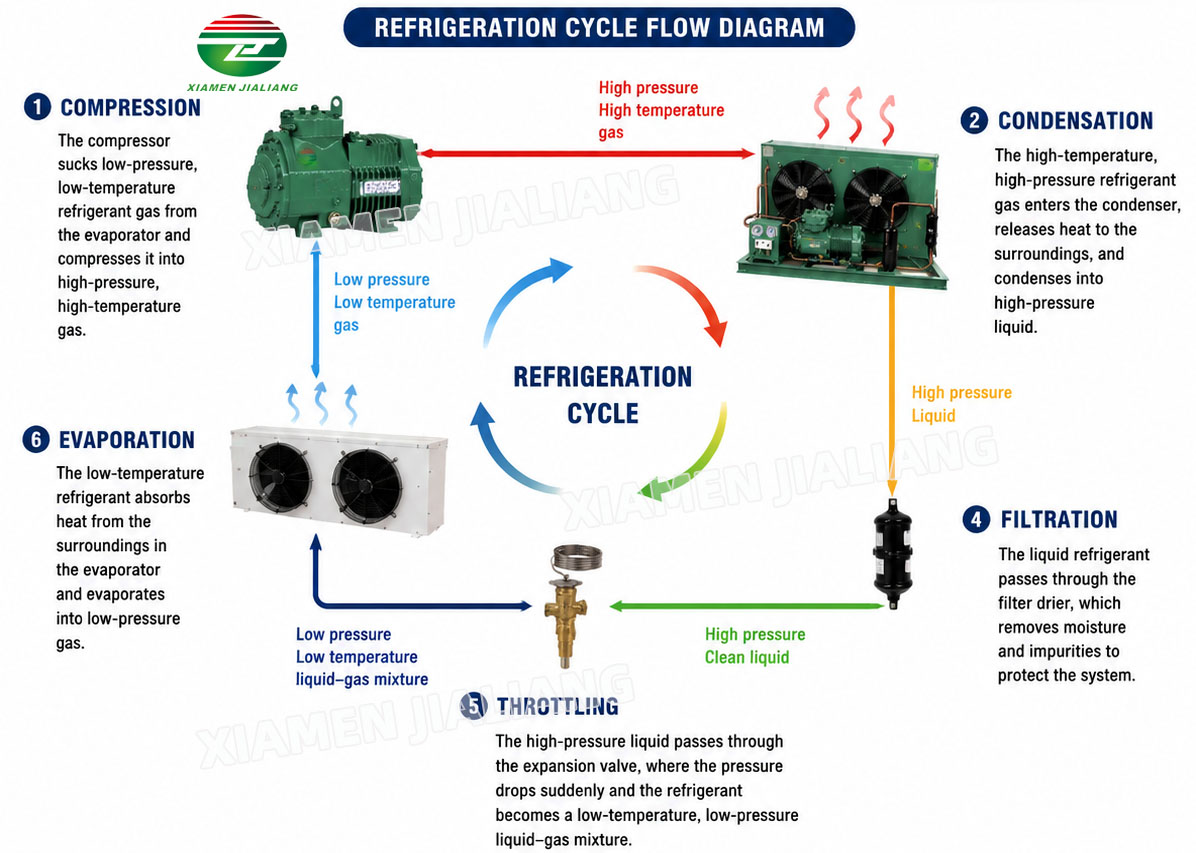
The refrigeration process works through continuous circulation:
1.The compressor compresses low-pressure refrigerant gas into high-pressure gas.
2.The high-temperature refrigerant enters the condenser.
3.The condenser releases heat through air or water cooling.
4.The refrigerant becomes liquid and enters the evaporator.
5.The evaporator absorbs heat from the cold room.
6.The refrigerant returns to the compressor and repeats the cycle.
This continuous process maintains the required storage temperature.

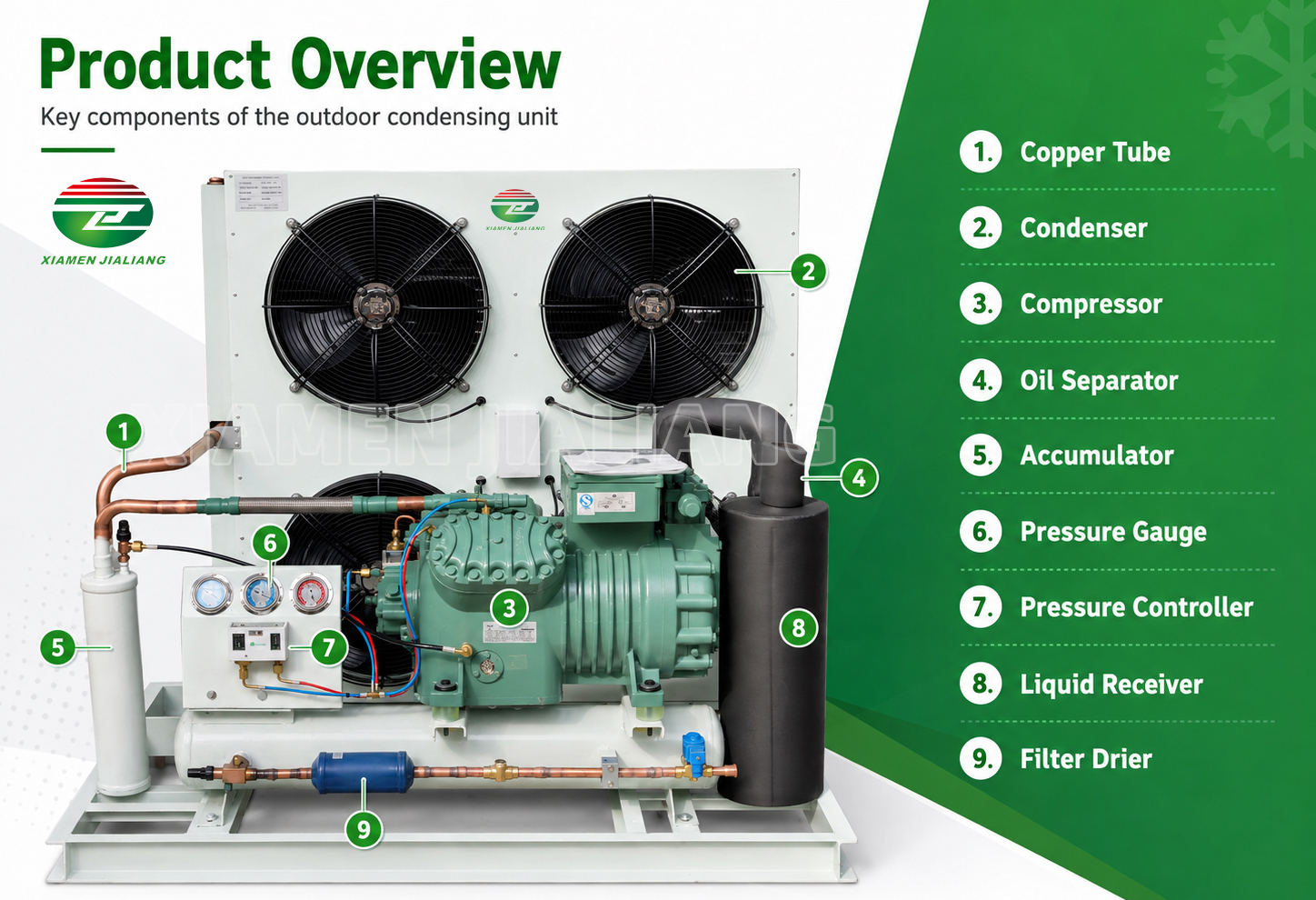
| COOLING CAPACITY(W) TE=-15°C | COMPRESSOR | FAN | REFRIGERANT | DIMENSIONSLxWxH(mm) | |
| POWER (HP) | QTY | POWER (W) | |||
| 3000 | 3 | 2 | 180 | R404A/R507 | 1600x800x1100 |
| 4000 | 4 | 2 | 250 | R404A/R507 | 1600x800x1100 |
| 5000 | 5 | 2 | 250 | R404A/R507 | 1800 x900x1200 |
| 6000 | 6 | 2 | 300 | R404A/R507 | 1800 x900x1200 |
| 8000 | 8 | 3 | 300 | R404A/R507 | 2000x 1000 x1300 |
| 10000 | 10 | 3 | 350 | R404A/R507 | 2000x 1000 x1300 |
How to Choose the Right Condensing Unit?
1. Required Storage Temperature
Different products require different temperature conditions:
2. Cold Room Capacity
The required refrigeration capacity depends on: Cold room size,Storage volume,Product type,Loading frequency,Ambient temperature
Proper matching improves energy efficiency and system reliability.
3. Operating Environment
Installation conditions affect performance.
For example:
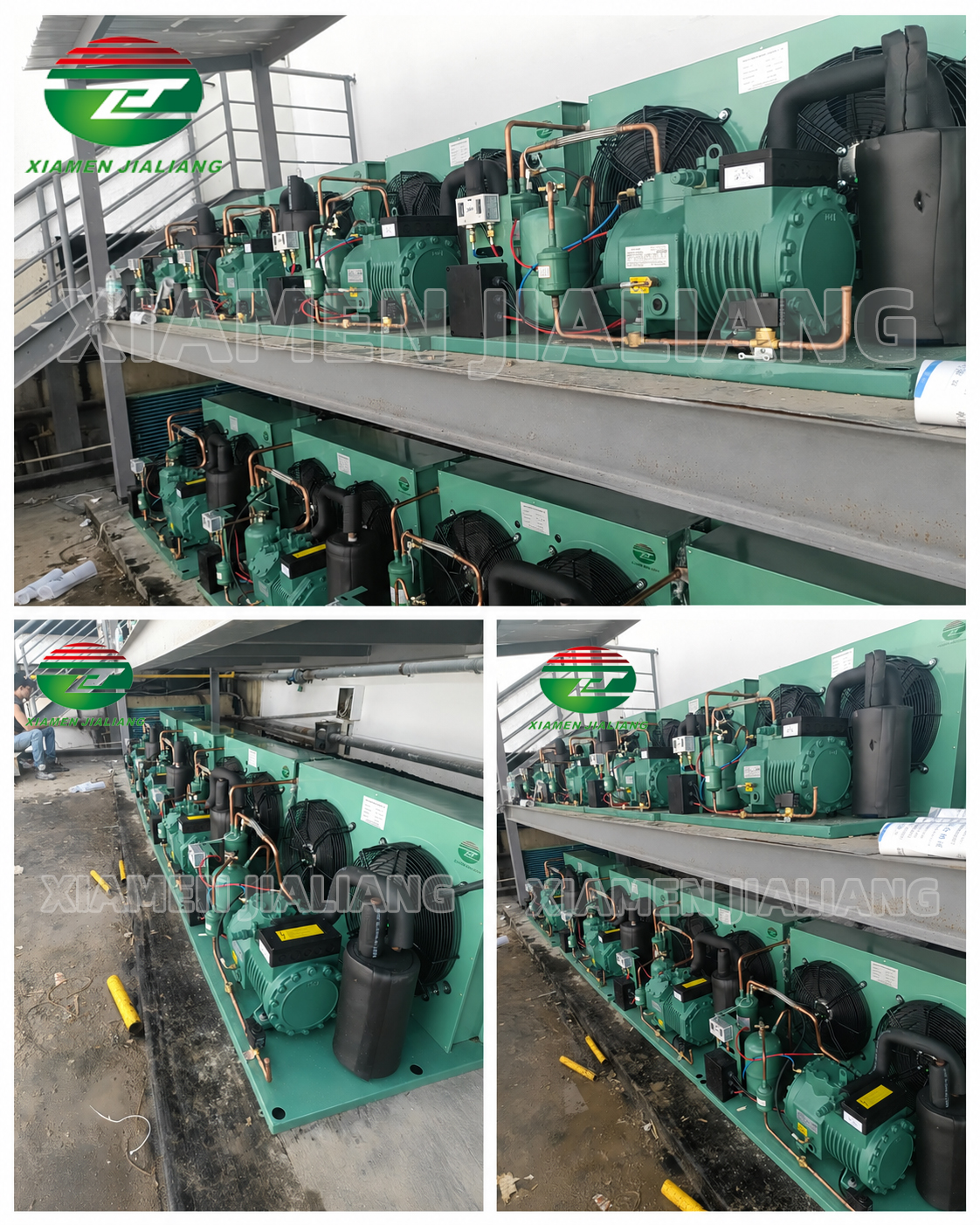
Hot climates require stronger heat rejection capability.
Outdoor installations require durable protection design.
FAQ
Q1: Our local climate is very hot/cold, can the compressor unit achieve the cooling effect?
A1: We will appropriately increase the condenser to resist hot weather according to the customer's local temperature. Or optimize the electric control box to ensure that it can still work at low temperatures.
Q2: Can the compressor unit be installed on the ceiling?
A2: Yes, but you need to reserve space on the top of the cold storage, and we will also configure enough copper pipes accordingly.
Q3: The voltage is 110V, can it be used?
A3: No, refrigeration equipment in the Chinese market can only produce at least 220V.