How To Store And Customize Seafood Cold Rooms?
Customized construction of seafood cold storage
How To Store And Customize Seafood Cold Rooms?
To effectively store and customize seafood cold rooms, it is necessary to control both storage management and customized design separately.
Firstly, let's talk about the seafood storage process: Different types of seafood have different requirements for storage temperature. Generally, frozen seafood needs to be maintained at -18 ℃ or below, while fresh seafood needs to be adjusted to a suitable low temperature range of 0 ℃ to 4 ℃ according to the variety; When storing, it is necessary to classify and partition the seafood to avoid mixing different flavors. At the same time, the humidity of the cold storage should be controlled, generally maintained at around 90% -95%, to reduce the dry consumption caused by the loss of seafood moisture; Before storage, the quality of seafood should be controlled to avoid the mixing of spoiled goods. During the storage process, the temperature and condition of the goods should be regularly inspected, following the principle of first in, first out to avoid long-term accumulation of goods.
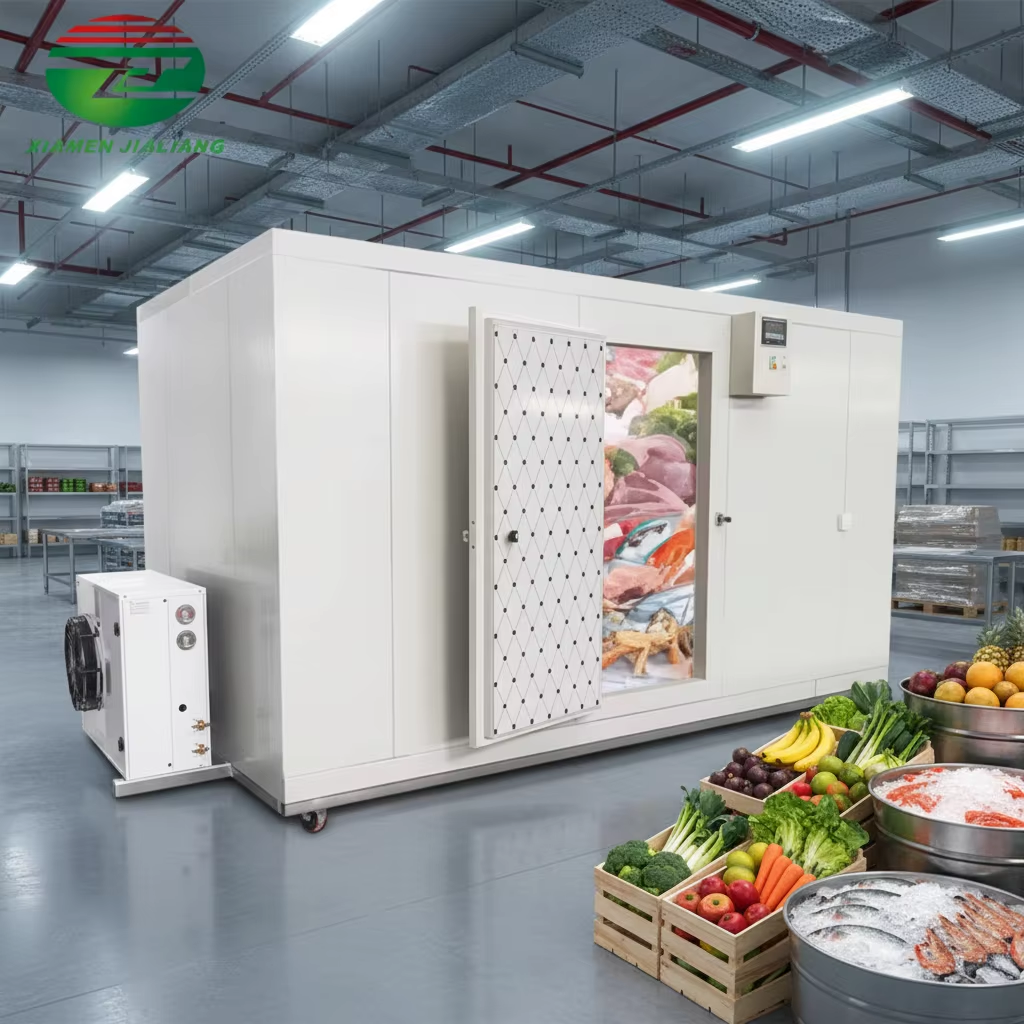
Let's talk about the customization process again: the first step in customization is to clarify one's own needs, confirm the seafood categories that need to be stored, daily reserves, and turnover frequency, in order to determine the overall size of the cold room; Secondly, suitable equipment should be selected according to the needs, including refrigeration units, insulation boards, temperature monitoring systems. If phased shipments are required, corresponding sorting areas should also be configured. At the same time, the design scheme should be adjusted based on the area, floor height, and power supply conditions of the installation site; Finally, it is necessary to prepare cost planning in advance, choose suitable configurations based on one's own budget, and reserve space for future expansion and maintenance to meet the needs of subsequent business adjustments.
How to build a seafood cold storage?
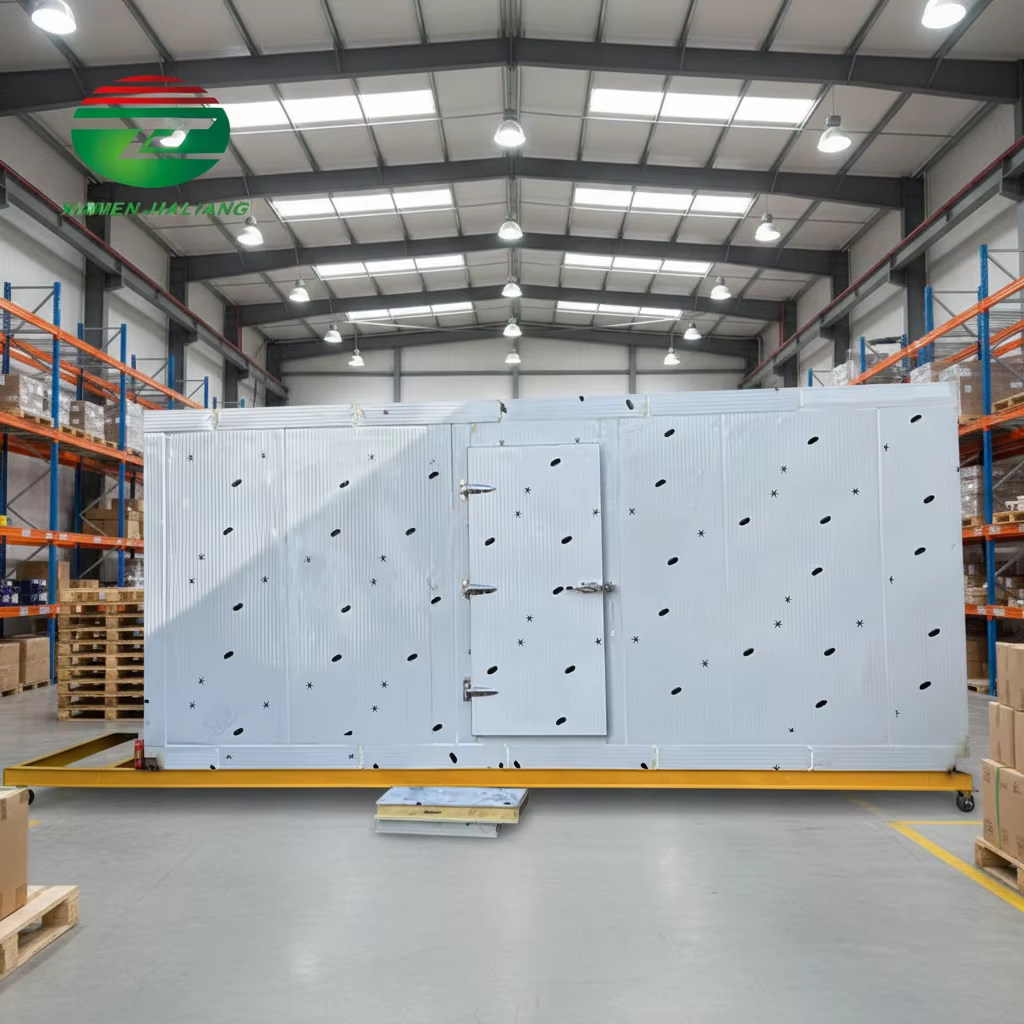
To build a seafood cold storage, it is necessary to combine the special requirements of seafood storage, and proceed according to the process from site survey, scheme design to construction acceptance.
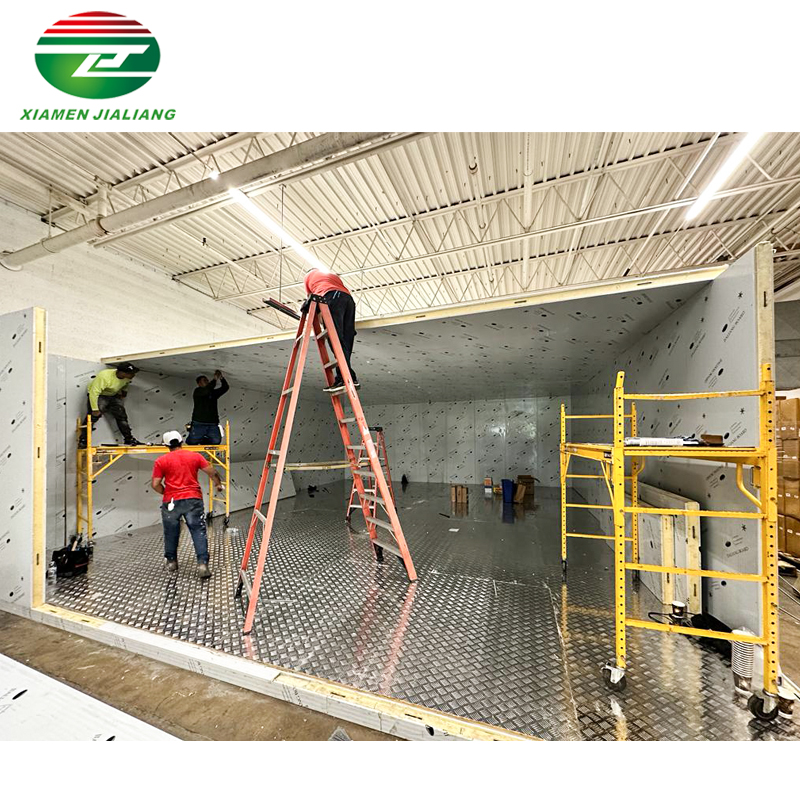
Firstly, it is necessary to survey the installation site in advance, confirm the load-bearing capacity, floor height, surrounding environment, and power supply and drainage conditions of the site, eliminate problems such as water leakage and abnormal ventilation that may affect the use of the cold storage, and confirm whether the site meets local fire and safety regulations.
Next, the type of cold storage should be determined based on storage needs. If the main focus is on storing frozen seafood, a low-temperature cold storage should be selected. If the main focus is on temporarily storing fresh seafood, a high humidity fresh-keeping cold storage should be designed. At the same time, the flow of the cold storage should be planned according to the site conditions to facilitate the sorting of goods in and out. After completing the design, select a construction team that meets the standards for construction. During the installation process, control the construction quality of insulation layer splicing and refrigeration pipeline layout,
After the construction is completed, a trial run of at least 72 hours should be conducted to test the temperature stability, temperature control accuracy, and operational status of various equipment in the cold storage. Only after confirming that all indicators meet the storage requirements can it be put into use.
How to maintain the seafood cold room in daily life?
Proper daily maintenance of seafood cold storage can effectively extend its service life and ensure the stability of storage efficiency. In daily maintenance, it is necessary to regularly clean the interior of the cold storage. Timely remove scattered impurities and frost condensation from the goods, as excessive frost can affect refrigeration efficiency. During the cleaning process, special attention should be paid to avoiding damage to the insulation layer and refrigeration pipelines.
At the same time, it is necessary to regularly check the operation status of the refrigeration unit. Clean the dust accumulated on the condenser, check for refrigerant leaks, and check if the voltage and oil pressure are within normal range. Once any abnormal noise or decreased refrigeration efficiency is detected, professional personnel should be contacted promptly for maintenance.
In addition, it is necessary to regularly calibrate temperature monitoring equipment to prevent inaccurate temperature control from affecting the storage quality of seafood. For cold storage that has been out of use for a long time, it is also necessary to regularly start and test run the equipment for a period of time to maintain its performance and avoid problems such as pipeline aging and unit failure.
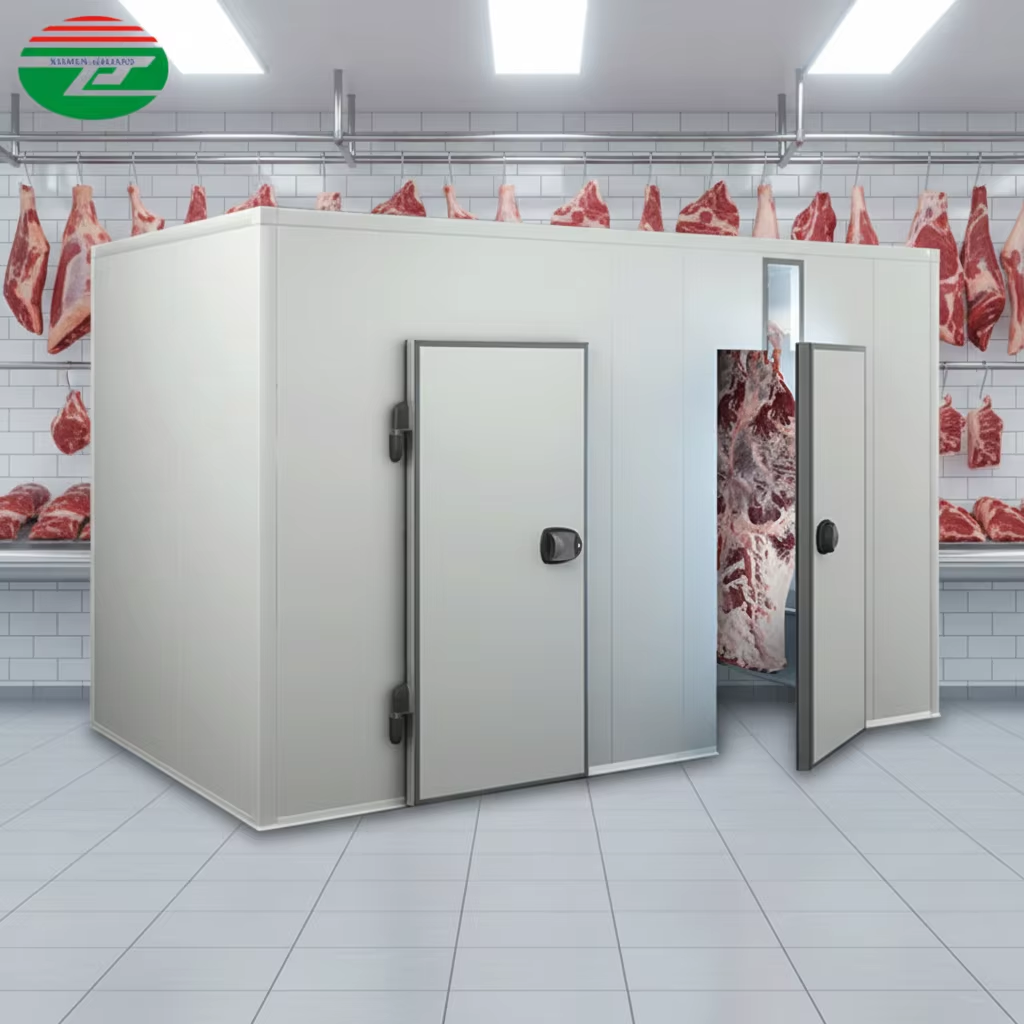
Finally, it is necessary to carry out daily maintenance of the cold storage door, check whether the sealing strip of the cold storage door is cracked or aged, promptly clean the debris at the door rail, ensure smooth opening and closing, tight sealing, and avoid energy consumption and temperature fluctuations caused by cold air leakage. In daily use, attention should be paid to standardized operation. After opening and closing the cold storage door, it should be closed in a timely manner to avoid opening the door for a long time to allow outside hot air to enter, reduce frosting and equipment load, so as to ensure the long-term stable operation of the seafood cold storage.
For more information, please visit www.coldroomjl.com